

In the rapidly evolving world of technology, biometric devices are set to redefine how we manage identity, security, and workforce efficiency. As we step into 2026, emerging biometric sensors like vein recognition, gait analysis, and voice biometrics are gaining traction, promising more accurate and seamless authentication methods. These advancements aren’t just about replacing traditional systems; they’re integrating with AI and deep learning to enable predictive analytics, turning raw biometric data into actionable insights for businesses. For HR professionals and organizations, this means a transformation in next-gen HRMS, attendance, and payroll ecosystems, where tools like the best biometric attendance system can prevent time theft, streamline operations, and ensure compliance.
The Biometrics Institute, a leading authority on ethical biometric practices, highlights the importance of responsible innovation in their reports, emphasizing privacy and inclusivity. Coupled with insights from industry leaders, these trends point to a future where contactless biometric systems dominate, especially in post-pandemic workplaces. Whether you’re exploring face recognition attendance or portable biometric attendance machines, understanding these shifts is crucial for staying ahead. In this article, we’ll dive into the key developments, their implications, and how they fit into modern workforce management— with a nod to solutions like SalaryBox that are pioneering biometric integration in HRMS for Indian enterprises.
As we look toward 2026 and beyond, the landscape of biometric attendance is expanding beyond familiar technologies like fingerprint and face recognition. Emerging sensors are focusing on unique physiological and behavioral traits that are harder to spoof, offering enhanced security for applications in offices, manufacturing, and remote sites. According to recent industry analyses, the global biometric technology market is projected to reach around $60-80 billion by 2027, driven by these innovations.
One standout is vein recognition, a contactless method that scans the unique vein patterns in a person’s hand or finger. Unlike surface-level biometrics, vein patterns are internal and invisible to the naked eye, making them highly secure against forgery. In 2026, vein recognition is expected to become more prevalent in high-security environments, such as financial institutions and healthcare. For workforce systems, imagine an employee biometric attendance device that uses vein scanning for quick, hygienic check-ins—ideal for preventing buddy punching in industries like retail and manufacturing. The Biometrics Institute notes that vein tech aligns with privacy standards, as it doesn’t capture external images, reducing data breach risks.
Gait recognition is another game-changer, analyzing how a person walks to verify identity. This behavioral biometric uses sensors in floors, cameras, or wearables to capture stride patterns, speed, and posture. By 2026, gait tech will integrate into smart buildings and mobile biometric attendance apps, allowing seamless authentication without stopping. In workforce management, it’s perfect for frontline workers or field teams, where traditional biometric machines for attendance might be impractical. For instance, in construction or logistics, gait recognition could track attendance passively, ensuring accurate records for hourly workers without disrupting workflows. Challenges like environmental factors (e.g., carrying loads) are being addressed through AI enhancements, making it viable for hybrid workforce attendance.
Voice biometrics rounds out the trio, leveraging speech patterns, tone, and rhythm for identification. With advancements in AI, voice systems can now distinguish accents and even detect stress levels. In 2026, expect voice recognition to boom in cloud-based biometric attendance systems, especially for remote employees. Picture logging into a biometric attendance login via a simple voice command on a mobile app—efficient for global teams. The integration with AI face search and other modalities creates multi-factor systems, boosting accuracy to over 99% in some cases. However, concerns around deepfake voices are pushing developers toward liveness detection features.
These emerging technologies are shifting from niche to mainstream, with contactless biometric systems becoming the norm. In India, where the best attendance machine in India often combines face detection attendance with these new sensors, adoption is accelerating. For businesses, tips to buy the best attendance machines in 2026 include prioritizing scalability, integration with HRMS, and ROI—such as reduced time theft through features like biometric attendance system prevent time theft.
AI is the powerhouse behind the next wave of biometric devices, transforming them from static tools to intelligent systems. Deep learning, a subset of AI, enables biometric systems to learn from vast datasets, improving accuracy and adaptability. In 2026, AI integration will make face recognition online faster and more reliable, even in low-light or masked scenarios.
One key area is multi-modal biometrics, where AI fuses data from multiple sources—like combining facial recognition system with voice or gait—for robust verification. This reduces false positives, crucial for the best face recognition attendance machine. Deep learning algorithms analyze patterns in real-time, adapting to changes like aging or injuries, which traditional systems struggle with.
In attendance management, AI-powered biometric time & attendance machines can detect anomalies, such as unusual login patterns, flagging potential fraud. For example, integrating AI attendance with payroll biometric attendance system automates calculations, ensuring precise salary processing. Predictive capabilities allow systems to forecast attendance trends, aiding shift scheduling and roster management.
Privacy remains a focus, with AI enabling edge computing—processing data on-device rather than in the cloud—to comply with regulations like GDPR. In India, biometric attendance system India is seeing AI-driven solutions that support labor law compliance, making them ideal for multi-location enterprises.
Biometric data isn’t just for verification; it’s a goldmine for predictive analytics. By 2026, advanced algorithms will mine this data to predict workforce behaviors, enhancing efficiency in HR ecosystems.
For instance, in a biometric attendance system with salary calculator, predictive analytics can forecast overtime needs based on historical check-ins, optimizing budgets. In education institutions, benefits of biometric attendance devices include predicting absenteeism patterns to improve student engagement.
In manufacturing or retail, biometric attendance device ROI in manufacturing/retail companies is amplified by analytics that identify fatigue through gait or voice changes, preventing accidents. For remote biometric attendance system for field workforce, analytics track productivity trends, supporting hybrid models.
Tools like SalaryBox exemplify this, offering cloud-based attendance management with predictive features for small to medium enterprises, ensuring seamless integration with HRMS software.
Biometrics are central to evolving HRMS, attendance, and payroll systems, creating interconnected ecosystems that automate and secure operations. In 2026, next-gen platforms will feature biometric attendance integration with payroll, eliminating manual errors and ensuring real-time data flow.
For frontline workforce, biometric attendance system for frontline workforce includes mobile biometric attendance devices that sync with cloud-based systems, supporting attendance device for hourly workers. This scalability across locations is vital for global operations, with features like biometric attendance report generating insights for managers.
Implementing biometrics in the workplace involves a biometric attendance system buying guide: assess needs, compare fingerprint vs face recognition attendance machine, and ensure user-friendly interface. For Indian enterprises, a buyer’s guide biometric attendance system Indian enterprises emphasizes cost-benefit analysis, with ROI from reduced buddy punching.
Hybrid workforce attendance tracking benefits from remote systems, like biometric device attendance for multi-location / global workforce. Contactless options, such as touchless attendance system, address health concerns, while iris recognition attendance system adds layers for high-security needs.
Challenges like data privacy are met with encrypted, compliant systems. Overall, biometrics foster trust, efficiency, and innovation in HR.
In conclusion, 2026 marks a pivotal year for biometric devices, with emerging tech, AI integration, and predictive analytics reshaping workforce management. Businesses adopting these trends will gain a competitive edge, ensuring secure, efficient operations.
In 2026, the biometric landscape is buzzing with innovative sensors that go beyond traditional fingerprint and face recognition. Vein recognition devices, which map internal vein patterns for contactless authentication, are leading the charge due to their high security and resistance to spoofing. Gait recognition sensors analyze walking patterns using cameras or wearables, ideal for passive identification in busy environments like offices or factories. Voice biometrics, enhanced by AI, capture speech nuances for seamless logins on mobile biometric attendance apps. These technologies integrate into the best biometric attendance system, offering features like automated attendance tracking and biometric attendance integration with HRMS. For Indian businesses, portable biometric attendance machines with these sensors provide scalability for multi-location setups. According to industry reports, adoption is driven by needs for touchless systems post-pandemic, with ROI evident in reduced time theft. When choosing, compare fingerprint vs face recognition attendance machine for accuracy—vein and gait often edge out in privacy compliance. Overall, these emerging devices promise a future of effortless, secure workforce management, making them essential for next-gen HR systems.
AI is revolutionizing biometric devices in 2026 by enhancing accuracy, speed, and adaptability. Deep learning algorithms process vast datasets to improve face detection attendance and voice recognition, achieving near-perfect precision even in challenging conditions like poor lighting. In AI attendance systems, predictive analytics forecast employee behaviors from biometric data, optimizing shift scheduling and preventing issues like fatigue. Integration with HRMS allows seamless data flow, automating payroll and compliance checks. For example, AI face search in facial recognition attendance systems detects liveness to counter deepfakes, boosting security for remote workers. Cloud-based biometric attendance systems leverage AI for real-time insights, such as biometric attendance reports that highlight trends. In India, the best biometric system for HR attendance system incorporates AI to prevent buddy punching, offering ROI through cost savings. Challenges like bias are addressed via ethical AI frameworks from bodies like the Biometrics Institute. Tips for implementation include selecting devices with user-friendly interfaces and scalability. Ultimately, AI turns biometrics from simple verification tools into intelligent ecosystems, transforming how businesses handle attendance and payroll.
Vein recognition scans the unique patterns of veins in hands or fingers using near-infrared light, creating a secure, internal biometric template. Unlike surface-based methods like face identifier or fingerprints, it’s invisible and hard to replicate, making it spoof-proof. In 2026, it’s hailed as the future due to its contactless nature, aligning with health trends and privacy laws— no external images are stored, reducing breach risks. For workforce applications, vein tech integrates into employee biometric attendance devices, enabling quick check-ins without physical contact, ideal for hygienic environments like healthcare or food processing. Compared to face recognition attendance, it offers higher accuracy in variable lighting. The Biometrics Institute praises its ethical profile, and market growth projects widespread adoption by 2030. In payroll biometric attendance systems, it prevents time theft effectively. For buyers, look for features like biometric attendance machine with software for easy integration. While costlier initially, ROI in manufacturing comes from efficiency gains. Vein recognition’s reliability positions it as a cornerstone for next-gen biometrics, especially in multi-modal setups.
Gait recognition identifies individuals by analyzing their walking style—stride, posture, and rhythm—using sensors or cameras. This behavioral biometric is passive, requiring no active input, which sets it apart from traditional biometric machine for attendance. In 2026, it will transform workforce systems by enabling seamless tracking in dynamic settings like warehouses or construction sites, where mobile biometric attendance devices can capture data on the go. Integrated with HRMS, it supports hybrid workforce attendance by logging presence without interruptions, perfect for field workers. AI enhances accuracy by accounting for variables like clothing or loads, reducing false negatives. In attendance management biometric system, gait prevents buddy punching and integrates with payroll for accurate hourly worker records. For Indian enterprises, it’s scalable for multi-location operations, with cloud-based attendance management ensuring real-time syncing. Benefits include labor law compliance through precise timestamps. However, privacy concerns necessitate transparent policies. As per trends, gait will complement face tracking in multi-modal systems, offering a hands-free alternative that’s cost-effective long-term.
Predictive analytics uses AI to analyze biometric data trends, forecasting future behaviors to enhance attendance systems. In 2026, it processes check-in patterns from biometric time attendance devices to predict absenteeism, overtime needs, or peak hours, aiding shift scheduling for frontline workers. This improves efficiency in biometric attendance system features, reducing operational costs by 20-30% through proactive planning. For example, in education, it flags at-risk students; in retail, it optimizes staffing. Integrated with HRMS, it automates payroll adjustments, ensuring accuracy in biometric attendance integration with payroll. Cloud-based biometric attendance system for remote field workforce benefits most, providing insights for hybrid models. ROI is clear: preventing time theft via anomaly detection, like unusual logins. In India, buyer’s guide for biometric attendance system emphasizes analytics for enterprises. Challenges include data quality, but AI refines this. Overall, it elevates systems from reactive to strategic, fostering better workforce management and compliance.
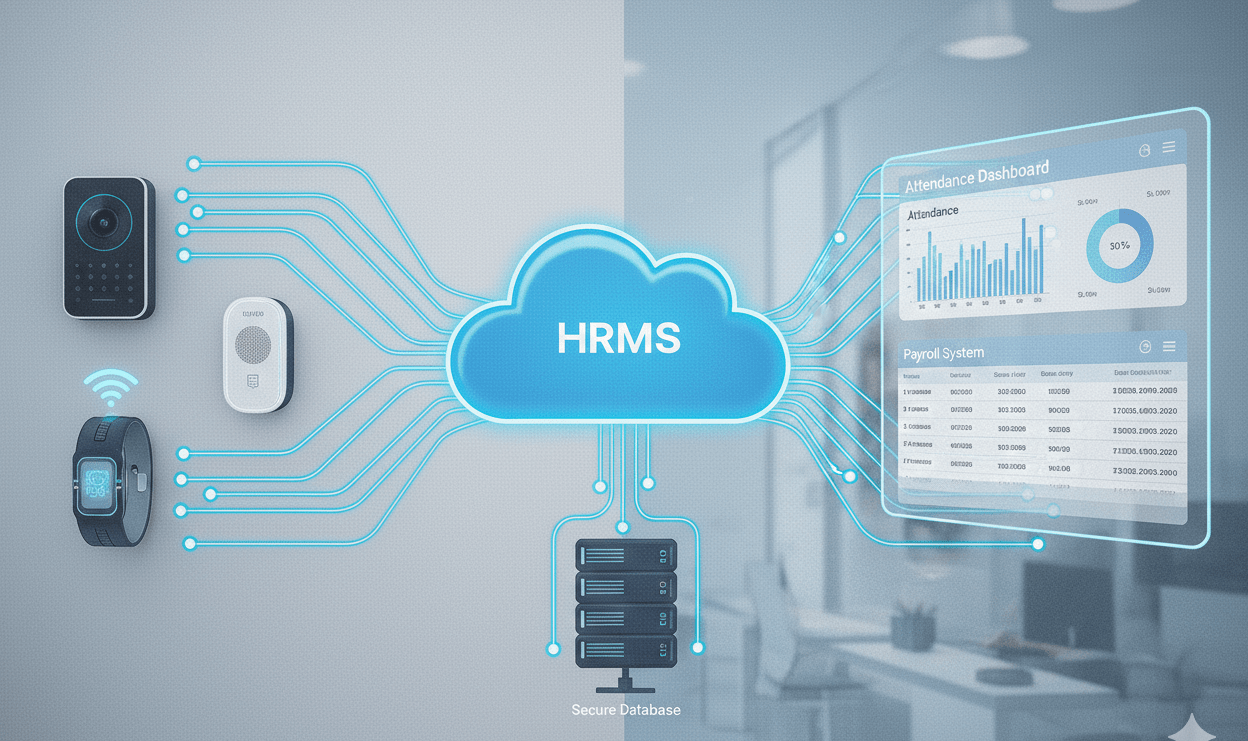
In 2026, biometrics will seamlessly integrate with next-gen HRMS, attendance, and payroll via APIs and cloud platforms, creating unified ecosystems. Biometric attendance devices capture data in real-time, feeding into HRMS for automated processing—eliminating manual entries and errors. For payroll, integration ensures precise calculations based on verified hours, with features like biometric attendance system with salary calculator. In multi-location enterprises, scalability allows global syncing, supporting remote and hybrid employees through mobile apps. AI adds value by generating reports and predictive insights for roster management. In India, the best biometric attendance machine for office includes HRMS compatibility, aiding compliance. Benefits: reduced admin time, prevented fraud via face recognition accuracy. SalaryBox, for instance, offers such integrations for streamlined operations. Buyer’s guides recommend assessing compatibility and security. This fusion enhances user experience, making systems indispensable for modern businesses.
Yes, contactless biometric systems are surging in popularity in 2026, driven by hygiene concerns and tech advancements. Technologies like facial recognition attendance system and vein scanning allow touchless check-ins, reducing germ spread in offices and public spaces. Face recognition online dominates, with AI improving speed and accuracy to 99%. For workforce, touchless attendance system integrates with portable machines, ideal for hourly workers in retail or manufacturing. Market trends show a 25% growth, as per reports, with iris and voice options gaining ground. In HRMS, they support remote tracking, enhancing hybrid workforce attendance. Privacy-compliant designs use edge processing. In India, biometric attendance system app adoption is high for field teams. ROI includes lower maintenance and fraud prevention. While challenges like lighting affect accuracy, AI mitigates this. Overall, contactless systems are the future, offering convenience and safety.
Biometric systems in 2026 are increasingly safe and privacy-compliant, thanks to advanced encryption and regulations. Data is stored as hashed templates, not raw images, minimizing breach risks. Liveness detection counters spoofing in face or voice systems. The Biometrics Institute advocates ethical standards, ensuring inclusivity and consent. In workforce applications, like employee biometric attendance, compliance with GDPR and India’s DPDP Act is standard, with features for data anonymization. Cloud-based systems use secure protocols for transmission. For buyers, select devices with certifications. While no system is foolproof, multi-factor integration boosts security. In HR, this builds trust, preventing misuse. Overall, with responsible implementation, biometrics offer robust protection.
Absolutely, biometrics excel for remote and hybrid employees in 2026 through mobile and cloud integrations. Mobile biometric attendance apps use smartphone cameras for face or voice verification, enabling anywhere check-ins. For field workforce, portable devices sync data in real-time to HRMS, supporting attendance tracking software vs biometric attendance system debates by combining both. AI ensures accuracy in varying environments, with predictive analytics optimizing schedules. In India, solutions for multi-location teams include geofencing for verification. Benefits: prevents time theft, ensures compliance, and provides reports. SalaryBox aids this with user-friendly tools. Challenges like connectivity are addressed via offline modes. This makes biometrics versatile for modern work models.
Industries like manufacturing, retail, healthcare, education, and logistics will benefit most from next-gen biometric devices in 2026. In manufacturing, biometric attendance prevents time theft, boosting ROI through accurate tracking for hourly workers. Retail uses contactless systems for quick staff logins, integrating with payroll. Healthcare prioritizes secure, hygienic vein or iris recognition for compliance. Education leverages devices for student attendance, with analytics predicting issues. Logistics benefits from mobile gait or voice tech for field teams, ensuring hybrid tracking. In India, these support multi-location enterprises. Overall, gains include efficiency, security, and cost savings across sectors.